
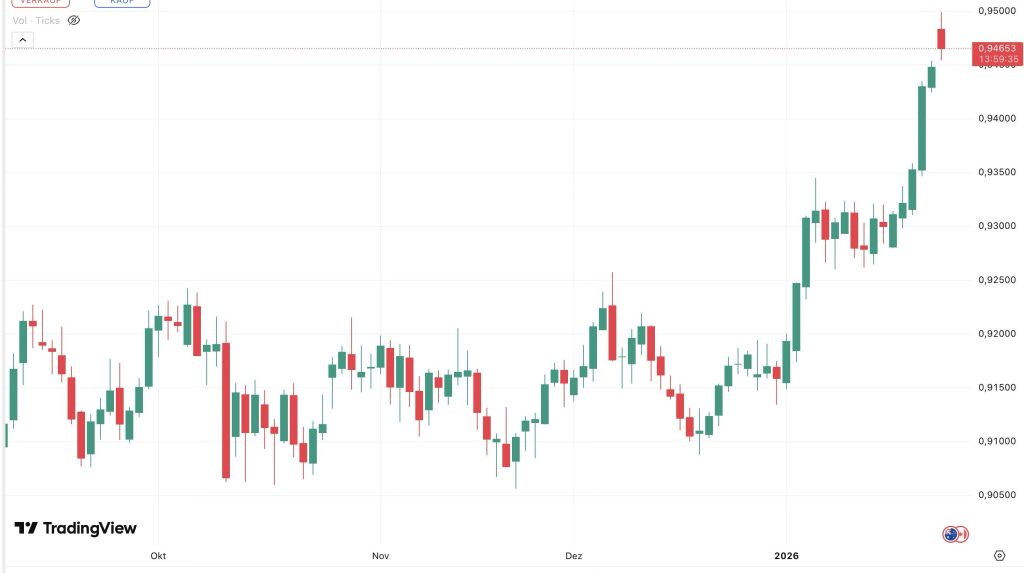
As we conclude January and transition into the new year, several of systems have navigated a period of heightened equity volatility. A rare alignment of macroeconomic drivers created a challenging environment for specific currency pairs this week, sparking rapid, high-intensity price shifts in AUDCAD and NZDCAD. Market anxiety surrounding the Federal Reserve’s future leadership, coupled with a historic rally in precious metals and clashing central bank policies, intensified fluctuations in typically low-volatility assets. This resulted in a broad increase in drawdown, which we examine in detail below through a breakdown of recent drivers and our forward-looking strategy.
USD Catalyst
The start of 2026 marks a significant transition for the Federal Reserve, as Jerome Powell’s eight-year tenure as Chair approaches its conclusion in May. With President Trump currently interviewing potential successors, markets are pricing in a high probability of a “dovish” nominee who may prioritize aggressive interest rate cuts. This climate of administrative uncertainty has significantly dampened USD demand. Simultaneously, silver has surged nearly 3%, shattering records to trade near $99 per ounce, as the retreating dollar continues to fuel a massive flight to precious metals.
Commodities Performance Update
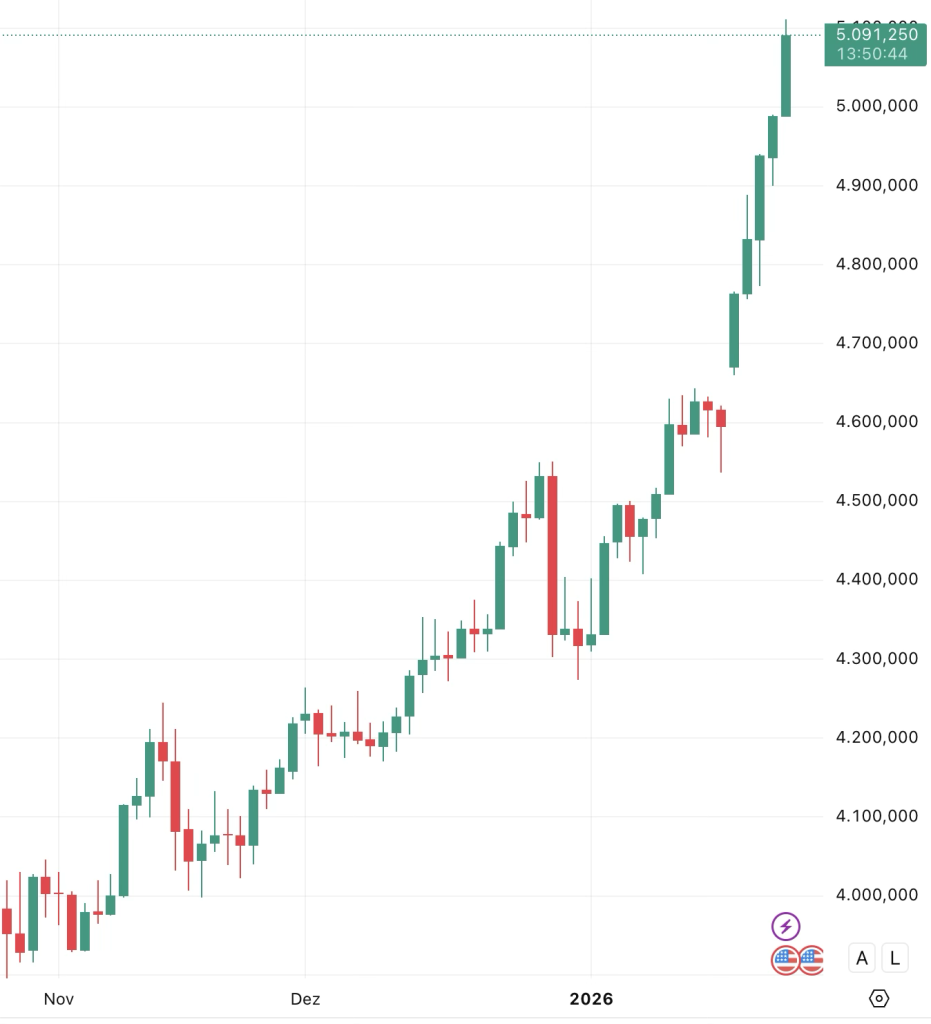
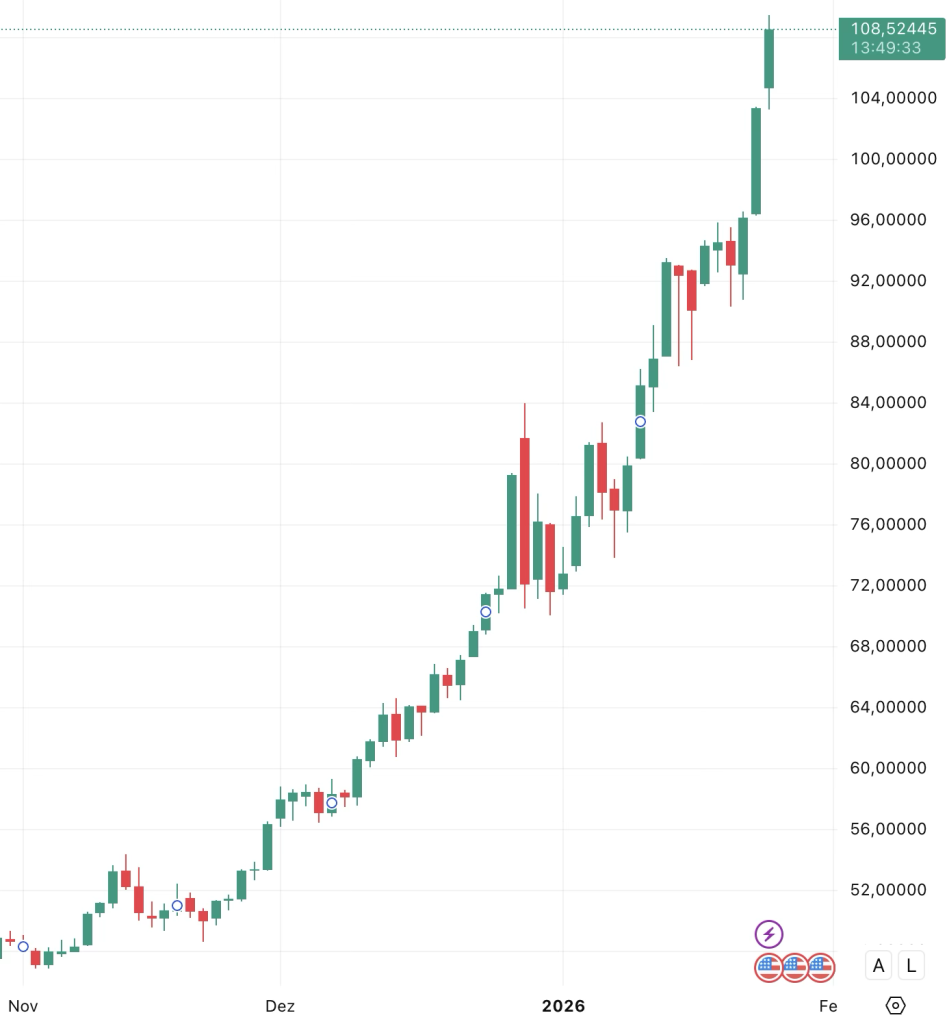
The combination of a softening USD and global geopolitical tension has acted as a massive tailwind for precious metals. Following a historic 2025—where spot gold climbed roughly 85% and silver skyrocketed by 250%—the momentum has persisted into the current year. Gold has already appreciated 17.7% year-to-date, with silver posting a remarkable 51.7% gain since the beginning of 2026.
Milestones were shattered this week as gold surpassed the $5,000 per ounce threshold and silver broke through the $105 mark. Both assets have surged by over 17% and 51% respectively in the opening weeks of the year alone. This unprecedented rally has provided a significant lift to the Australian Dollar, as the demand for resources continues to bolster commodity-backed currencies.
AUD & NZD Momentum
The Reserve Bank of Australia (RBA) intensified market focus this month by deliberating the necessity of interest rate hikes for 2026 to combat a resurgence in inflation. This hawkish shift follows third-quarter and October consumer price data that significantly exceeded expectations, leading the RBA board to conclude that the risk of price instability has escalated.
As inflation proves more resilient than anticipated, a growing consensus of market analysts believes the RBA will be forced to pivot from a neutral stance to active tightening throughout 2026. A recent survey by The Australian Financial Review highlighted this shift: 17 of the 38 economists polled now anticipate at least two rate increases over the next 18 months. Notably, several major institutions, including Commonwealth Bank and NAB, have adjusted their forecasts to expect a rate hike as early as the upcoming February 3 meeting.
Risk Management & Technical Context
The intense directional momentum observed recently challenged traditional mean-reversion frameworks. The combination of this morning’s price gap and expanded spreads led to specific systematic adjustments:
- Subsystem A: Hit its stop-loss threshold without an active hedge due to prohibitively high spreads.
- Subsystem B: Proactively liquidated positions via internal risk protocols to mitigate further exposure at a reduced loss.
This shift’s magnitude relative to the medium-term Average True Range (ATR) is reminiscent of the April 2025 tariff shock, which produced a similar temporary spike in drawdown. While several subsystems maintain open exposure, our diverse array of algorithmic logic provides built-in protection through staggered entry and exit points. We are currently maintaining a posture of active oversight, with validated stop-loss and hedging parameters in place, while reducing volume on systems that could increase net exposure.
Precious Metals & AUD/NZD Outlook
Sustainability of the current gold and silver rally will likely require further supply-side constraints or a definitive dovish pivot from major central banks. Analysts are currently flagging potential “exhaustion” in the metals market, suggesting that the rally which fueled AUD and NZD strength may soon enter a corrective phase. Any retracement in these metals would undermine a primary support pillar for the Australian Dollar, favoring our short positions in AUDCAD and NZDCAD.
Monetary Policy & CAD Recovery
Following three consecutive rate cuts, the Federal Reserve is widely anticipated to maintain a hold at the upcoming January meeting, with markets pricing in only one or two additional cuts for the remainder of 2026. A pause in the Fed’s easing cycle could provide much-needed stability to the USD and dampen “risk-on” sentiment.
Furthermore, interest rate differentials and technical momentum suggest a looming recovery for the Canadian Dollar. Financial institutions are currently projecting a gradual decline in USDCAD toward the 1.3500 level over the coming months. This anticipated CAD appreciation aligns directly with our strategy, as a stronger Loonie would apply downward pressure on both the AUDCAD and NZDCAD pairs.
RBA and the Data Horizon
While markets have already priced in potential hikes from the Reserve Bank of Australia, the board remains cautious. While inflation risks have risen, policymakers noted that some recent price jumps might be attributed to volatile, non-recurring factors. Consequently, the Q4 inflation data (due January 28) will be a critical pivot point. If these figures show cooling or the RBA adopts a more neutral tone, the Australian Dollar may relinquish its recent gains—a common occurrence in speculation-heavy markets where prices often correct once the actual data is realized.