
Market Overview and the US Dollar
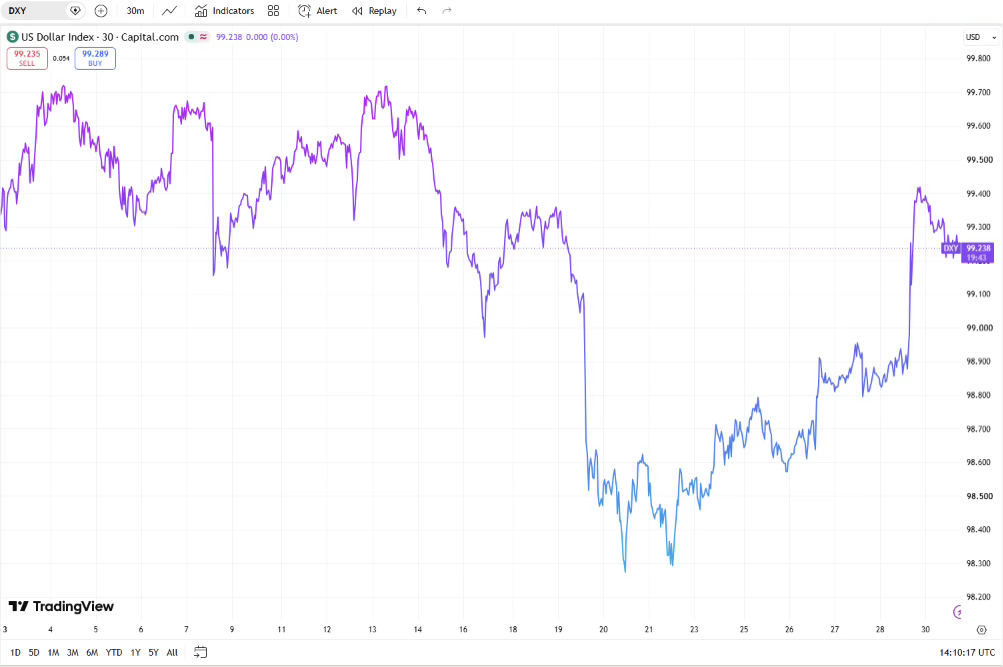
August 2026 delivered dramatic reversals throughout currency markets, fueled by fluctuating expectations for Federal Reserve rate hikes, a rare bond market intervention by the Treasury, and a decidedly hawkish conclusion at Jackson Hole. The US dollar remained the focal point, trapped between diminishing odds of a rate increase and a bond market that the Treasury refused to leave to its own devices. The greenback traded in a narrow band through mid-August, plunged when weak economic data collided with the Treasury’s actions, gradually clawed back its losses, and then violently reversed upward in the final two days following a crucial Fed address.
Economic Data and Dollar Volatility
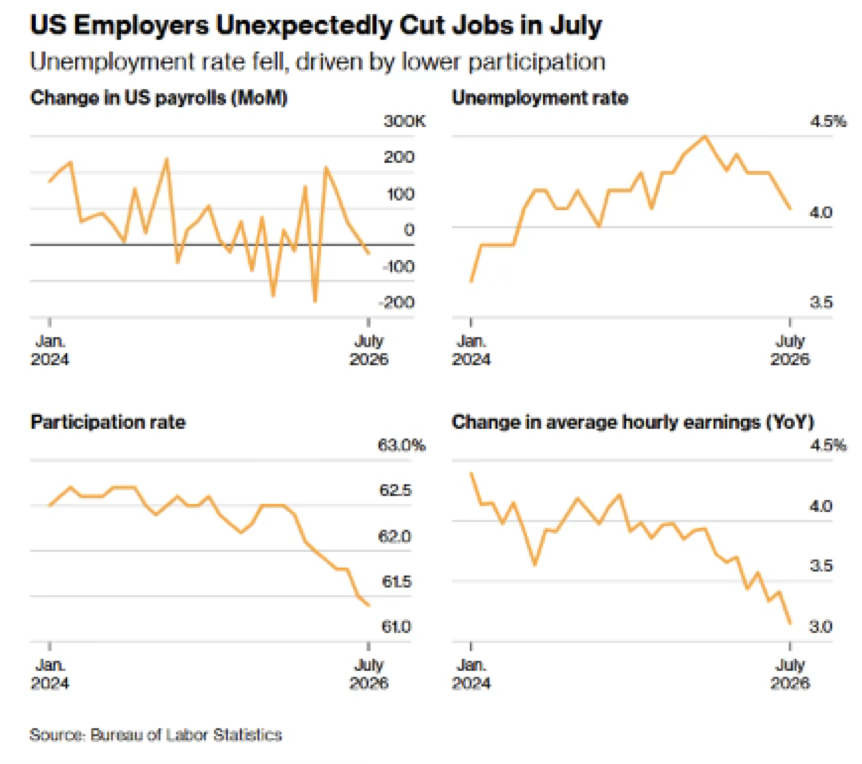
The month began with September rate hike expectations firmly in place, bolstered by an ISM Manufacturing reading of 55.6 that topped the 54.0 forecast. However, that momentum rapidly vanished: ADP employment grew by a mere 44k compared to the 70k anticipated, and July nonfarm payrolls surprisingly contracted by 23k against a projected 80k gain. These misses dragged rate hike probabilities from over 70% down toward 30% in a matter of days. A subsequent CPI print matching expectations at 3.4% year-over-year on August 12 provided the Fed some breathing room, allowing the dollar to bounce back to a two-week peak near 100 by August 13.
Treasury Intervention and the Mid-Month Slump
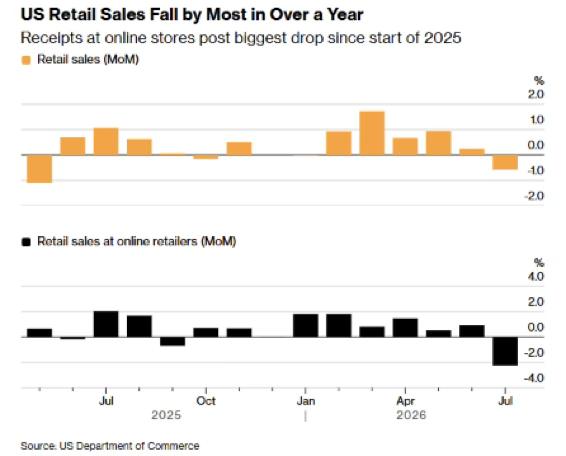
The established trading range shattered on August 14 after retail sales dropped 0.6%, widely missing the forecasted 0.1% increase. A more severe drop occurred between August 19 and 20. Even though hawkish FOMC minutes indicated a willingness to hike if inflation remained stubborn, this was completely eclipsed by the Treasury’s announcement to repurchase long-term debt and cap the 30-year yield around 5.31%. Investors interpreted this as transferring the pressure from bond prices directly onto the currency, sending the dollar tumbling nearly 0.9% in a single session to a three-month trough near 98.75.
Jackson Hole and the Month-End Reversal
The dollar’s recovery between August 20 and 27 was sluggish. Consumer confidence missed the mark at 89.4 versus the 90.3 estimate, and upward moves consistently stalled near the 200-day moving average as the market awaited the PCE report and the Jackson Hole symposium. The PCE matched expectations at 3.7% year-over-year, slightly above the 3.6% forecast, bumping hike odds back to 38% but leaving the broader debate unresolved. Clarity finally arrived on August 28 during Fed Chair Warsh’s Jackson Hole speech, which cemented price stability as the central bank’s absolute priority.
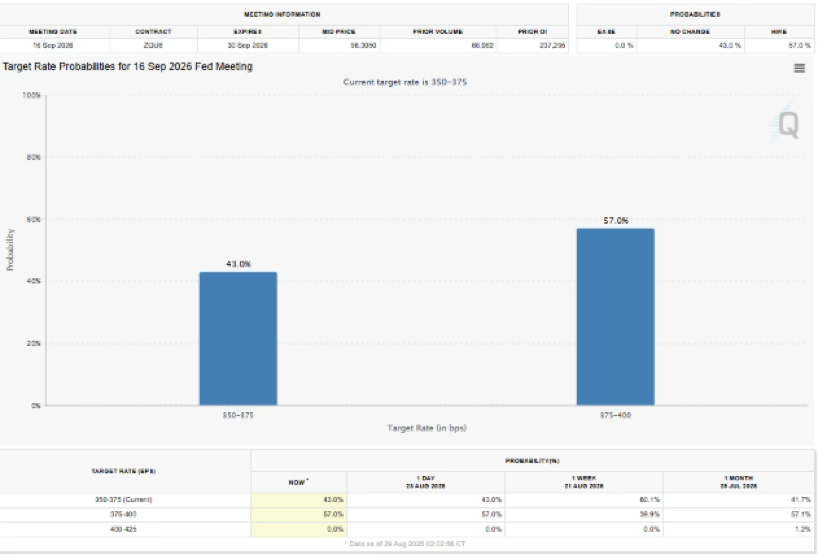
Consequently, September hike odds surged to 56% from 36% within minutes, propelling the dollar to a monthly close near 99.20 – virtually unchanged from where it started.
USDCAD: Labor Divergence and Tariff Shocks
The dollar’s wild fluctuations dictated the trajectory of every major currency pair, beginning with USDCAD. The pair declined for the majority of August, initially holding steady before a stark contrast in labor data accelerated the drop into a definitive breakdown.
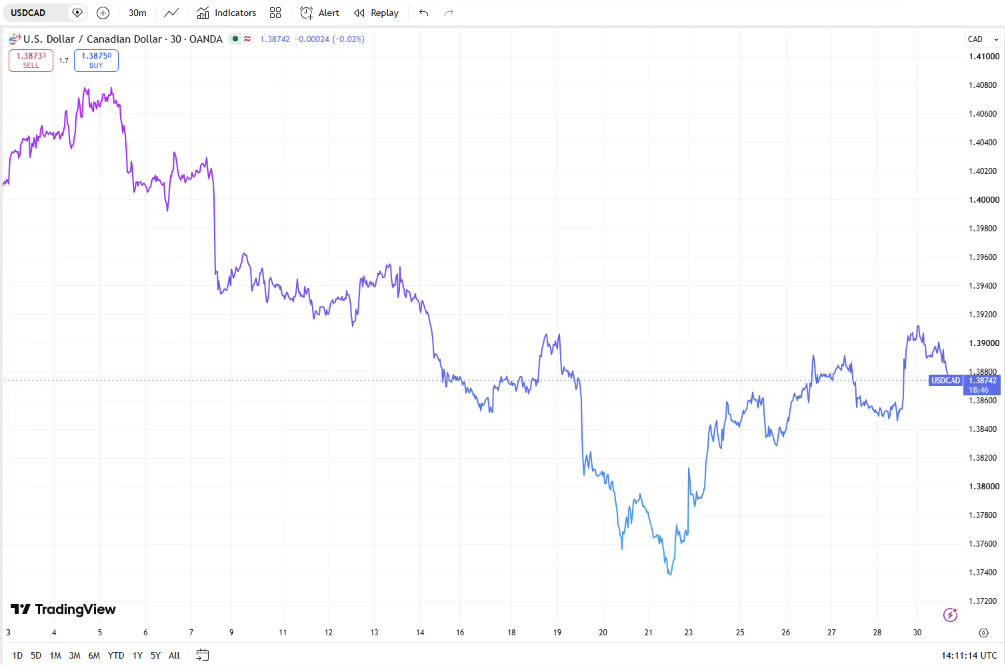
However, a resurgent US dollar erased these moves in the final week, overriding Canadian data that otherwise supported the loonie. After opening near monthly highs, the pair drifted lower starting August 5 following the weak US ADP report. The selloff intensified on August 7 when Canada added a robust 75,100 jobs against a 15,000 forecast, pushing its unemployment rate down to a two-year low of 6.4%, while US payrolls simultaneously shrank. The pair maintained a tight range even as Canadian CPI climbed to 3.0% year-over-year.
A more significant drop began on August 14, driven entirely by broad dollar weakness rather than Canadian fundamentals, as US retail sales disappointed and the Treasury’s debt buyback plan hammered the greenback. The Canadian dollar found support from elevated oil prices – with WTI near $85 due to disruptions in the Strait of Hormuz – even amidst the collapse of US-Canada trade talks and Washington’s imposition of 50% tariffs on $20 billion of Canadian exports on August 22. The pair eventually found a floor around 1.372.
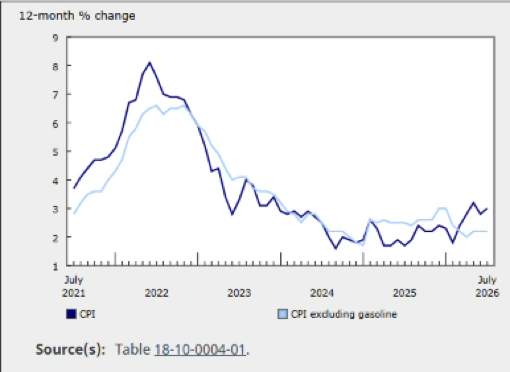
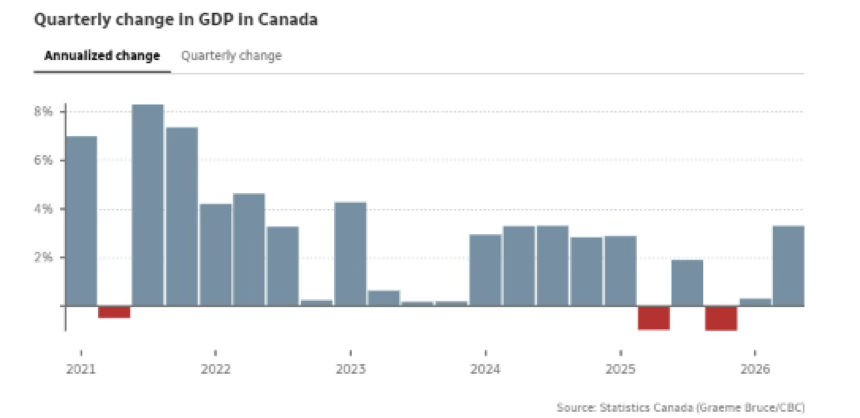
Ultimately, the late-month rebound stemmed from the US side. Despite Canada reporting an impressive 3.3% annualized Q2 GDP growth on August 28, the hawkish Jackson Hole address overshadowed the positive Canadian news, driving USDCAD back up to close near 1.390.
GBPUSD: Inflation Surprises and Yield Pressures
GBPUSD enjoyed an upward trajectory for most of August, propelled by unexpected UK inflation data and a global bond selloff, until Fed Chair Warsh’s hawkish stance at Jackson Hole pulled the pair back down at month-end.
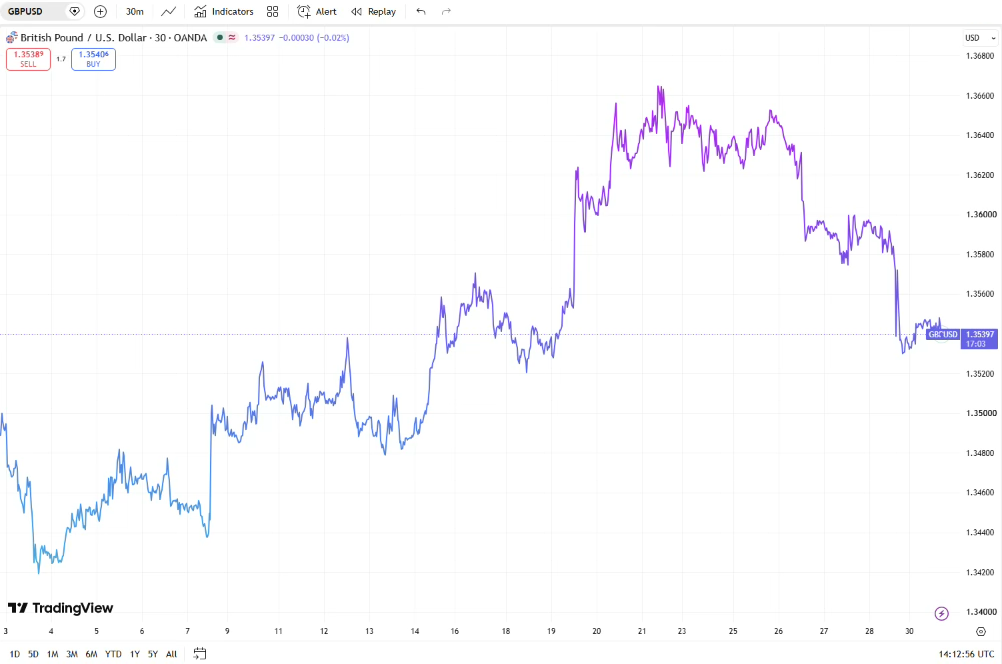
Starting near monthly lows, the pair remained under pressure early on due to solid US rate expectations, but rebounded after August 7 as dismal US payrolls sparked a broad dollar retreat. It held steady mid-month as UK GDP slowed to 0.4% and unemployment remained unchanged at 4.9%.
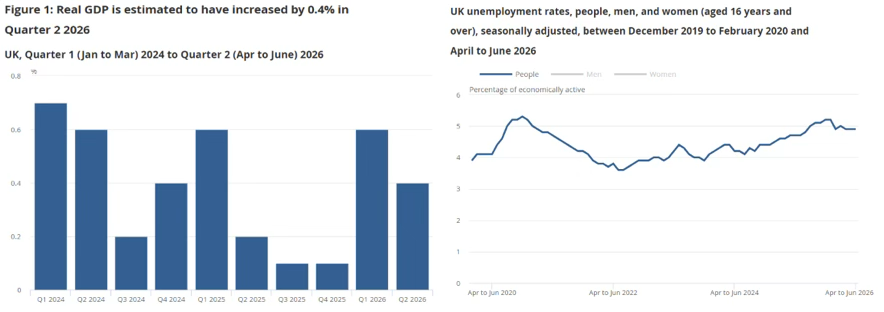
The most aggressive rally kicked off on August 19, when UK CPI unexpectedly jumped to 2.9% year-over-year, complicating any further easing plans for the Bank of England. Concurrently, the US Treasury’s debt buyback strategy pushed the dollar to a three-month low, combining to launch GBPUSD to a monthly peak near 1.367 by August 21.
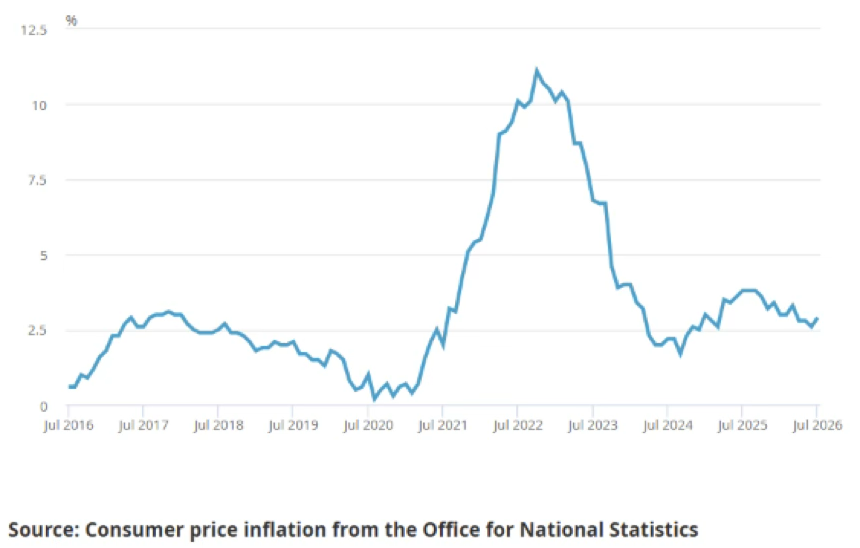
The pair maintained these highs as UK gilt yields rose alongside US Treasuries in a wider bond selloff. While higher yields typically benefit sterling, they also signaled mounting concerns regarding the UK’s fiscal health. The trend violently reversed on August 28 when the Fed’s reaffirmed inflation focus overwhelmed sterling’s yield advantage, sending GBPUSD sharply lower to finish near 1.353.
EURUSD: Eurozone Growth vs. The Fed
EURUSD spent the bulk of August advancing, initially triggered by a dismal US employment report and subsequently sustained by robust eurozone economic indicators. The pair began near its lows, jumped following the unexpected US payrolls contraction on August 7, and then consolidated as US CPI met expectations.
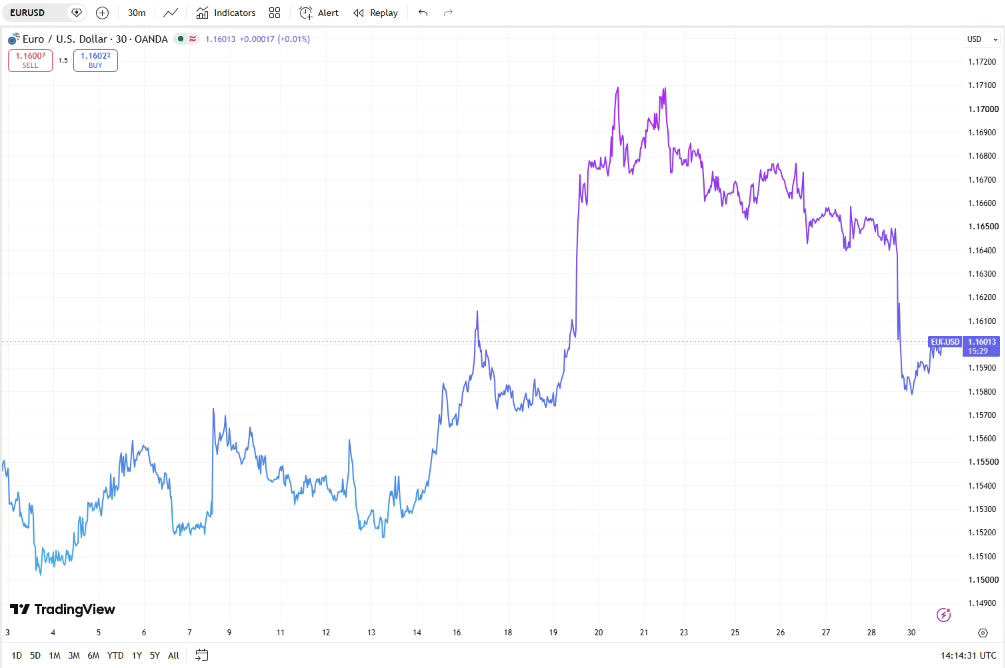
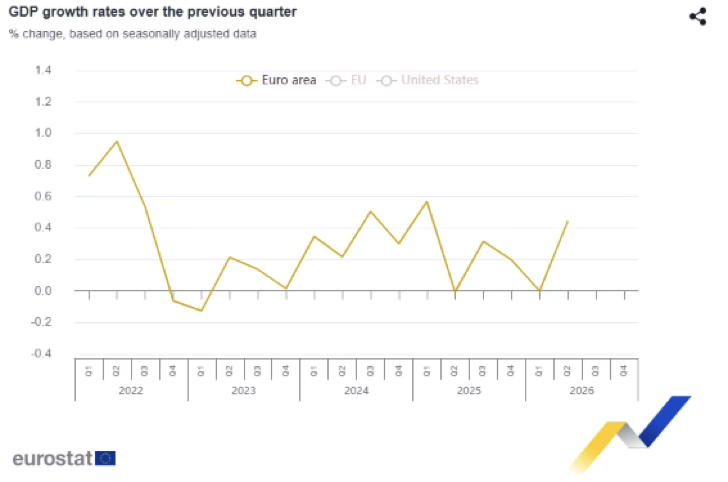
Bullish momentum returned on August 14 as eurozone Q2 GDP expanded by 0.4% – double the consensus and the fastest growth in over a year – coinciding with the sharp miss in US retail sales. The rally gained further traction on August 19 during the dollar’s Treasury-induced slump, fueled by a eurozone flash composite PMI that unexpectedly surged to a nine-month high of 52.1.
EURUSD crested near 1.171 around August 21 and drifted slightly lower over the next week despite confirmed eurozone inflation rising to 2.9%.
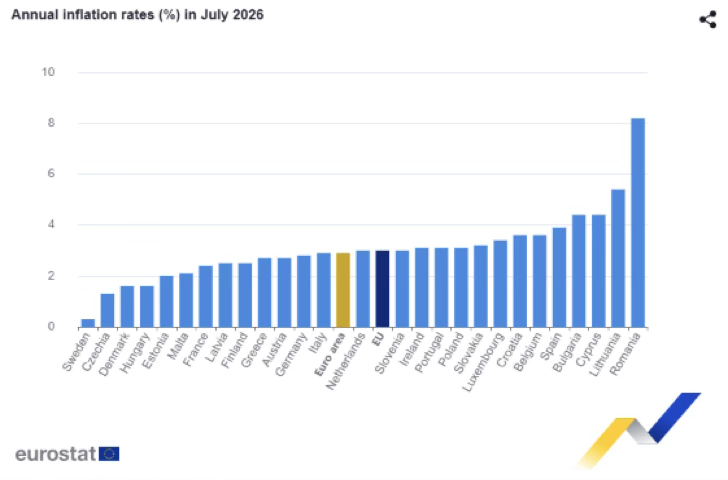
As with other majors, the euro’s strong monthly performance was entirely undone on August 28 by the Fed’s hawkish Jackson Hole commentary, causing EURUSD to slide and close near 1.16.
Gold: Fiscal Anxiety and Central Bank Buying
Gold surged approximately 10% in August, heavily supported by a softening dollar, escalating fears over US fiscal stability, and persistent central bank acquisitions, before a late-month hawkish pivot from the Fed triggered a pullback.
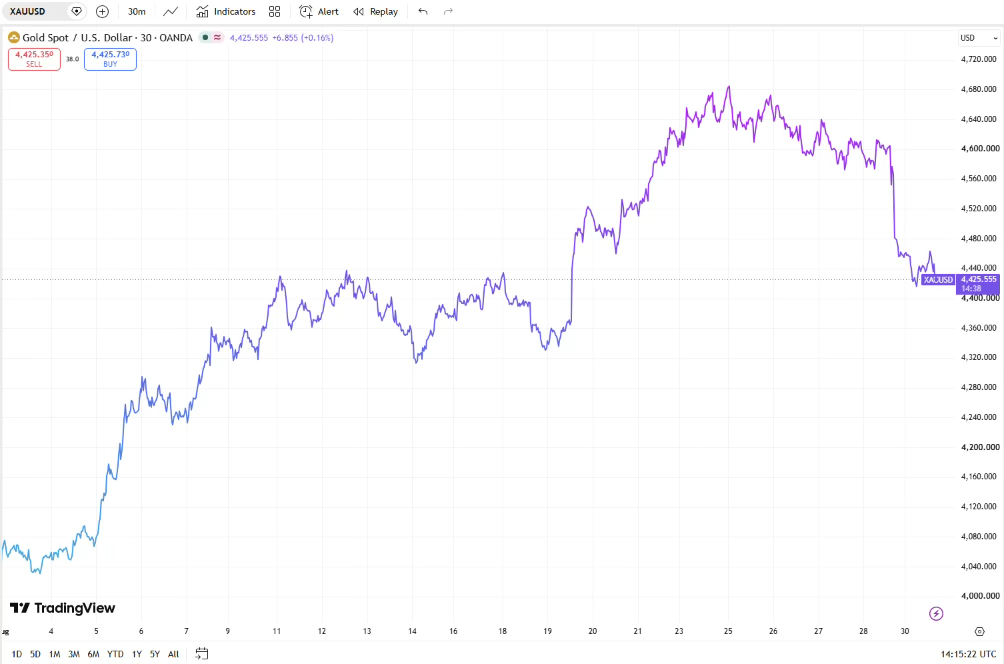
The precious metal broke out early, rallying from just above $4,000 following the negative US payrolls shock that rapidly repriced Fed rate expectations. It consolidated between $4,350 and $4,400 mid-month, then pushed higher on August 19 as the US Treasury’s debt buyback initiative pressured both yields and the dollar.
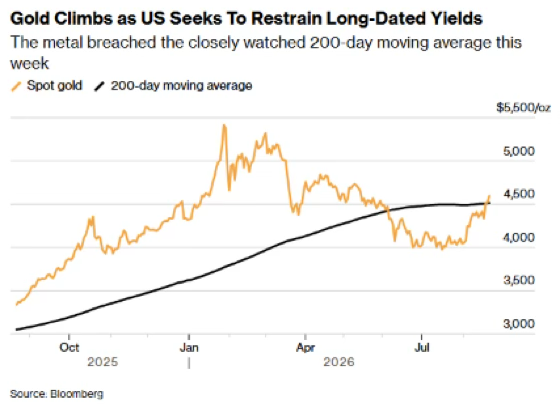
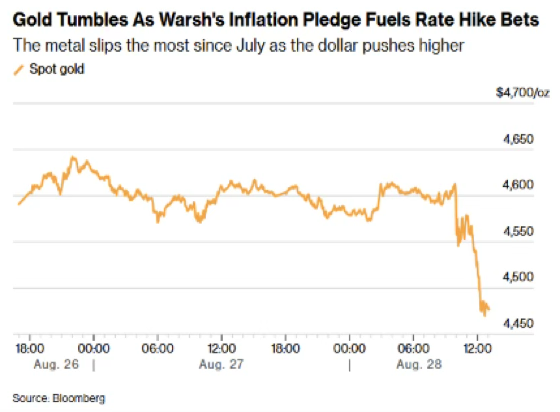
The most dramatic upward leg occurred after August 20 when the US national debt breached $40 trillion for the first time, igniting fresh anxieties regarding fiscal credibility and the dollar’s status as the global reserve currency. Structural support remained firmly in place from central banks, whose official-sector purchases skyrocketed 62% year-over-year to 288.9 tonnes in Q2. Gold ultimately hit a three-month zenith near $4,690 on August 25. The rally paused heading into month-end, and the Fed’s firm commitment to price stability at Jackson Hole strengthened the dollar, prompting gold to retreat from its highs to close around $4,425 – still registering substantial gains for the month.
Macro Outlook & Closing Perspective
August 2026 demonstrated how quickly macroeconomic narratives can unspool and re-anchor around central bank policy and sovereign debt interventions. While weak employment data and unexpected Treasury buybacks briefly triggered a dovish repricing across major currency pairs and boosted gold to near-record highs, Fed Chair Warsh’s firm stance at Jackson Hole served as a powerful reminder that inflation control remains the dominant catalyst for global asset pricing. Heading into the final months of the year, markets face a delicate balance: structural pressures – evidenced by US national debt crossing $40 trillion and strong central bank gold buying – will continue to test the dollar, even as hawkish Fed policy provides short-term support. Investors should expect heightened sensitivity around upcoming inflation prints and fiscal headlines as major currency pairs test key technical boundaries.